Buy evgym.com ?
We are moving the project
evgym.com .
Are you interested in purchasing the domain
evgym.com ?
domain@kv-gmbh.de · 0541-91531010
Buy evgym.com ?
What distinguishes all types of bonding: ionic bonding, metallic bonding, and covalent bonding?
Ionic bonding involves the transfer of electrons from one atom to another, resulting in the formation of positively and negatively charged ions that are attracted to each other. Metallic bonding involves the sharing of electrons among a sea of delocalized electrons, creating a "sea of electrons" that holds the metal atoms together. Covalent bonding involves the sharing of electrons between atoms, resulting in the formation of molecules. Despite their differences, all types of bonding involve the interaction of electrons between atoms to form stable chemical compounds. **
What distinguishes all types of chemical bonding: ionic bonding, metallic bonding, and covalent bonding?
The main distinction among the three types of chemical bonding lies in the way atoms are held together. In ionic bonding, atoms transfer electrons to achieve a stable electron configuration. Metallic bonding involves a sea of delocalized electrons shared among a lattice of metal atoms. Covalent bonding, on the other hand, involves the sharing of electrons between atoms to achieve a stable electron configuration. Each type of bonding results in different properties and behaviors of the substances formed. **


Similar search terms for Bonding
Top-Angebote
Products related to Bonding:
-
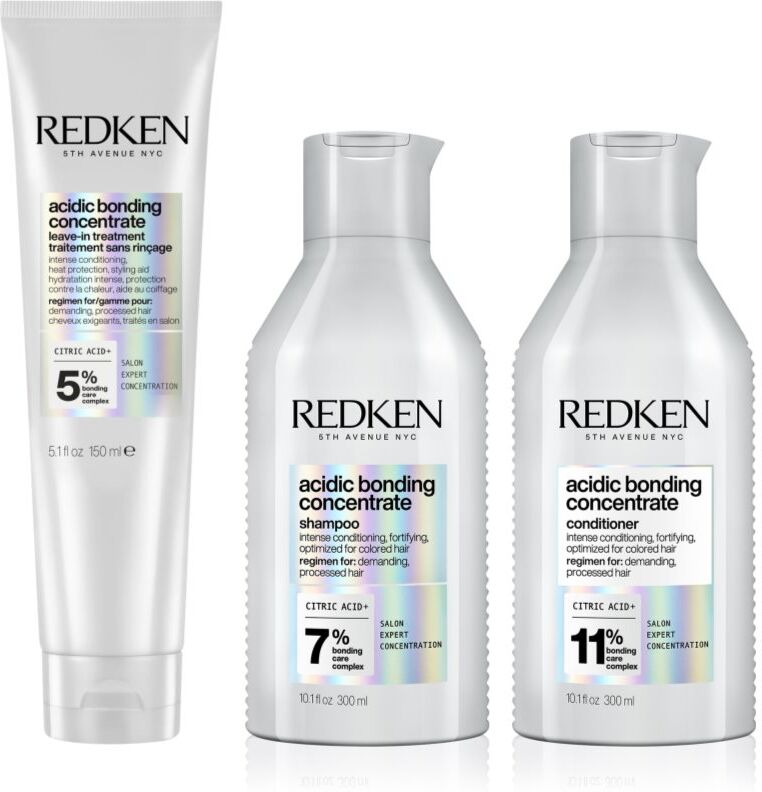
Redken Acidic Bonding Concentrate set for damaged hairRedken Acidic Bonding Concentrate, 1 pc, Leave-In Conditioners for Women, Discover a practical bundle of products designed to enhance your everyday moments. RedkenAcidic Bonding Concentrate set takes the hassle out of choosing by offering a combination of popular products. Now available together in one convenient pack. The set contains: Redken Acidic Bonding Concentrate Energising Shampoo for weak hair 300.00 ml Redken Acidic Bonding Concentrate Intensive Regenerating Conditioner 300.00 ml Redken Acidic Bonding Concentrate Strengthening Leave-In Care 150.00 ml How to use: Follow the instructions on the package.77,60 €*Shipping: 5,45 €Secure redirect to the provider
-
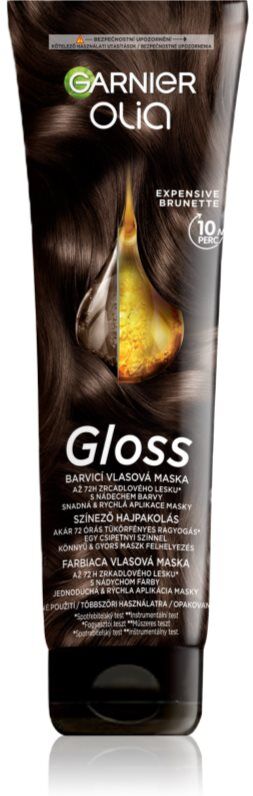
Garnier Olia Gloss Bonding Color Mask for hair shade Expensive Brunette 150 mlGarnier Olia Gloss, 150 ml, Tinted Shampoos for Women, For a temporary subtle change to your natural hair colour, you will appreciate a tinted shampoo from GarnierOliaGloss. It temporarily adds a subtle hint of colour to your hair so you can enjoy a hairstyle change without commitment. In addition, it gently removes dirt and grease from the hair and helps to nourish it. It will leave them silky soft and boost their shine, further enhancing the beauty of the newly improved shade. Characteristics: gives your hair a subtle shade gives your hair a subtle tint hydrates hair leaves hair soft revives hair colour7,36 €*Shipping: 5,45 €Secure redirect to the provider
-
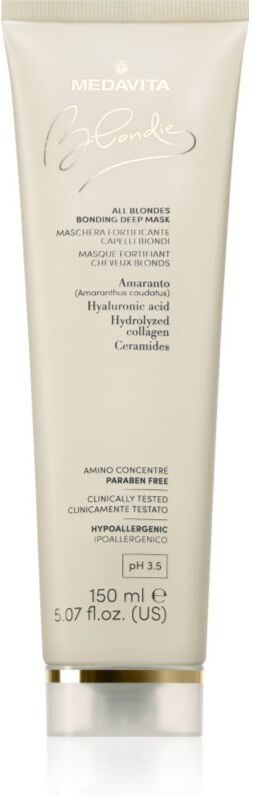
Medavita Blondie All Blondes Bonding Deep Mask Fortifying Mask for colour-treated hair 150 mlMedavita Blondie All Blondes Bonding Deep Mask, 150 ml, Hair Masks for Women, Do you feel that your hair needs more intensive care than conditioners or balsams can provide? A hair mask from MedavitaBlondieAll Blondes Bonding Deep Mask will perfectly enrich your hair care routine. Thanks to its high concentration of nourishing ingredients aimed at tackling specific problems, it restores vitality and beauty to your hair. It penetrates deep into the hair fibres to strengthen them, nourish them intensively, promote their regeneration and smooth their surface, leaving them beautifully soft to the touch, radiantly shiny, but also more resilient to damage. Characteristics: goes deep into the hair fibre restores hair structure extends the life of hair dye keeps hair flexible hair is soft to the touch How to use: Wash with shampoo, then apply to damp hair. Leave to act as instructed on the packaging, then rinse thoroughly.27,50 €*Shipping: 5,45 €Secure redirect to the provider

-
What are examples of ionic bonding, covalent bonding, and metallic bonding?
Ionic bonding occurs when one atom transfers electrons to another, resulting in the formation of positively and negatively charged ions that are attracted to each other. An example of ionic bonding is the bond between sodium and chlorine in sodium chloride (table salt). Covalent bonding occurs when atoms share electrons to achieve a full outer shell. An example of covalent bonding is the bond between two hydrogen atoms in a molecule of hydrogen gas (H2). Metallic bonding occurs in metals, where the outer electrons of the atoms are delocalized and free to move throughout the structure, creating a "sea" of electrons that hold the metal atoms together. An example of metallic bonding is the bond between atoms in a piece of copper metal. **
-
What is the difference between ionic bonding, covalent bonding, and metallic bonding?
Ionic bonding involves the transfer of electrons from one atom to another, resulting in the formation of positively and negatively charged ions that are held together by electrostatic forces. Covalent bonding involves the sharing of electrons between atoms to achieve a stable electron configuration. Metallic bonding occurs in metals, where electrons are delocalized and free to move throughout the material, creating a "sea of electrons" that hold the metal atoms together. Each type of bonding results in different properties and behaviors of the substances involved. **
-
Who is familiar with chemistry in ionic bonding, metallic bonding, and molecular bonding?
Individuals who have studied chemistry at a high school or college level are likely to be familiar with ionic bonding, metallic bonding, and molecular bonding. This includes students, teachers, and professionals in the fields of chemistry, chemical engineering, and materials science. Additionally, those who have a general interest in science and have taken courses or done independent study in chemistry may also have knowledge of these types of chemical bonding. **
-
What is the difference between covalent bonding and ionic bonding?
Covalent bonding involves the sharing of electrons between atoms to achieve a stable electron configuration, typically between nonmetals. Ionic bonding involves the transfer of electrons from one atom to another, resulting in the formation of positively and negatively charged ions that are attracted to each other, typically between a metal and a nonmetal. In covalent bonding, the atoms involved have similar electronegativities, while in ionic bonding, there is a significant difference in electronegativities between the atoms. **


What are the similarities between ionic bonding and covalent bonding?
Both ionic bonding and covalent bonding involve the sharing or transfer of electrons between atoms to achieve a stable electron configuration. In both types of bonding, the goal is for each atom to achieve a full outer electron shell. Additionally, both types of bonding result in the formation of a compound with a neutral charge. However, the key difference between the two is that ionic bonding involves the transfer of electrons from one atom to another, while covalent bonding involves the sharing of electrons between atoms. **
Is ionic bonding a polar or nonpolar atomic bonding in chemistry?
Ionic bonding is a type of polar atomic bonding in chemistry. This is because in an ionic bond, one atom donates an electron to another atom, resulting in the formation of positively and negatively charged ions. These opposite charges create a polar bond, with one end being more positive and the other end being more negative. This creates a strong electrostatic attraction between the ions, leading to the formation of the ionic bond. **
Top-Angebote
Products related to Bonding:
-
10ml LCN AFO Bonding GelSubsequent lifting is excluded. This extremely strong UV bonding agent is easy to apply and contains a light acid content. Contents 10 ml. The innovative All-for-One (AFO) texture. High Performance Gel System with advantages at a glance: suitable for all nail typesself-smoothingno liftingsflexible and unbreakableextremely scratch resistanteasy to usehigh wearing comfort28,44 €*Shipping: 5,90 €Secure redirect to the provider
-
AYUNCHE Enrich Bonding set for damaged hairAYUNCHE Enrich Bonding, 1 pc, For Easy Detangling for Women, Discover a practical bundle of products designed to enhance your everyday moments. AYUNCHEEnrich Bonding set takes the hassle out of choosing by offering a combination of popular products. Now available together in one convenient pack. The set contains: AYUNCHE Enrich Bonding Shampoo Intensive Regenerating Shampoo for damaged hair 200.00 ml AYUNCHE Enrich Bonding Mask Intensive Nourishing Mask for damaged and colour-treated hair 200.00 ml AYUNCHE Enrich Bonding Cream Intensive Regenerating Cream for damaged and colour-treated hair 100.00 ml AYUNCHE Enrich Bonding Oil Serum Regenerating Oil Serum for split hair ends 100.00 ml Characteristics: a set of cosmetic products for everyday use hair treatment for beautiful hair full of life for regeneration and nourishment of your hair a set at a favourable price for damaged hair How to use: Use every product from the cosmetic set according to the instructions.115,30 €*Shipping: 5,45 €Secure redirect to the provider
-
Redken Acidic Bonding Concentrate set for damaged hairRedken Acidic Bonding Concentrate, 1 pc, Leave-In Conditioners for Women, Discover a practical bundle of products designed to enhance your everyday moments. RedkenAcidic Bonding Concentrate set takes the hassle out of choosing by offering a combination of popular products. Now available together in one convenient pack. The set contains: Redken Acidic Bonding Concentrate Energising Shampoo for weak hair 300.00 ml Redken Acidic Bonding Concentrate Intensive Regenerating Conditioner 300.00 ml Redken Acidic Bonding Concentrate Strengthening Leave-In Care 150.00 ml How to use: Follow the instructions on the package.77,60 €*Shipping: 5,45 €Secure redirect to the provider
-
Garnier Olia Gloss Bonding Color Mask for hair shade Expensive Brunette 150 mlGarnier Olia Gloss, 150 ml, Tinted Shampoos for Women, For a temporary subtle change to your natural hair colour, you will appreciate a tinted shampoo from GarnierOliaGloss. It temporarily adds a subtle hint of colour to your hair so you can enjoy a hairstyle change without commitment. In addition, it gently removes dirt and grease from the hair and helps to nourish it. It will leave them silky soft and boost their shine, further enhancing the beauty of the newly improved shade. Characteristics: gives your hair a subtle shade gives your hair a subtle tint hydrates hair leaves hair soft revives hair colour7,36 €*Shipping: 5,45 €Secure redirect to the provider
-
What distinguishes all types of bonding: ionic bonding, metallic bonding, and covalent bonding?
Ionic bonding involves the transfer of electrons from one atom to another, resulting in the formation of positively and negatively charged ions that are attracted to each other. Metallic bonding involves the sharing of electrons among a sea of delocalized electrons, creating a "sea of electrons" that holds the metal atoms together. Covalent bonding involves the sharing of electrons between atoms, resulting in the formation of molecules. Despite their differences, all types of bonding involve the interaction of electrons between atoms to form stable chemical compounds. **
-
What distinguishes all types of chemical bonding: ionic bonding, metallic bonding, and covalent bonding?
The main distinction among the three types of chemical bonding lies in the way atoms are held together. In ionic bonding, atoms transfer electrons to achieve a stable electron configuration. Metallic bonding involves a sea of delocalized electrons shared among a lattice of metal atoms. Covalent bonding, on the other hand, involves the sharing of electrons between atoms to achieve a stable electron configuration. Each type of bonding results in different properties and behaviors of the substances formed. **
-
What are examples of ionic bonding, covalent bonding, and metallic bonding?
Ionic bonding occurs when one atom transfers electrons to another, resulting in the formation of positively and negatively charged ions that are attracted to each other. An example of ionic bonding is the bond between sodium and chlorine in sodium chloride (table salt). Covalent bonding occurs when atoms share electrons to achieve a full outer shell. An example of covalent bonding is the bond between two hydrogen atoms in a molecule of hydrogen gas (H2). Metallic bonding occurs in metals, where the outer electrons of the atoms are delocalized and free to move throughout the structure, creating a "sea" of electrons that hold the metal atoms together. An example of metallic bonding is the bond between atoms in a piece of copper metal. **
-
What is the difference between ionic bonding, covalent bonding, and metallic bonding?
Ionic bonding involves the transfer of electrons from one atom to another, resulting in the formation of positively and negatively charged ions that are held together by electrostatic forces. Covalent bonding involves the sharing of electrons between atoms to achieve a stable electron configuration. Metallic bonding occurs in metals, where electrons are delocalized and free to move throughout the material, creating a "sea of electrons" that hold the metal atoms together. Each type of bonding results in different properties and behaviors of the substances involved. **
Similar search terms for Bonding
-
Medavita Blondie All Blondes Bonding Deep Mask Fortifying Mask for colour-treated hair 150 mlMedavita Blondie All Blondes Bonding Deep Mask, 150 ml, Hair Masks for Women, Do you feel that your hair needs more intensive care than conditioners or balsams can provide? A hair mask from MedavitaBlondieAll Blondes Bonding Deep Mask will perfectly enrich your hair care routine. Thanks to its high concentration of nourishing ingredients aimed at tackling specific problems, it restores vitality and beauty to your hair. It penetrates deep into the hair fibres to strengthen them, nourish them intensively, promote their regeneration and smooth their surface, leaving them beautifully soft to the touch, radiantly shiny, but also more resilient to damage. Characteristics: goes deep into the hair fibre restores hair structure extends the life of hair dye keeps hair flexible hair is soft to the touch How to use: Wash with shampoo, then apply to damp hair. Leave to act as instructed on the packaging, then rinse thoroughly.27,50 €*Shipping: 5,45 €Secure redirect to the provider
-
Schwarzkopf Creme Supreme Gloss Bonding Color Mask adds moisture and shine shade Chocolate Brown 145 mlSchwarzkopf Creme Supreme Gloss, 145 ml, Tinted Shampoos for Women, For a temporary subtle change to your natural hair colour, you will appreciate a tinted shampoo from SchwarzkopfCreme SupremeGloss. It temporarily adds a subtle hint of colour to your hair so you can enjoy a hairstyle change without commitment. In addition, it gently removes dirt and grease from the hair and helps to nourish it. It will leave them silky soft and boost their shine, further enhancing the beauty of the newly improved shade. Characteristics: gives hair a brilliant shine extends the life of hair dye leaves hair soft and nourished goes deep into the hair fibre revives hair colour different intensity of the colour effect can be achieved by adjusting the length of exposure How to use: Use suitable protective gloves. Apply to shampooed and towel-dried hair. Then rinse out thoroughly.7,92 €*Shipping: 5,45 €Secure redirect to the provider
-
Baobab Collection Body Wellness Women Gift SetBaobab Collection Body Wellness Women, , Body Butters for Women, Everything for beautiful-looking skin all in one package. The Baobab Collection Body Wellness Women beauty gift set contains not one but several products to help you create or enrich your daily beauty routine and make you or your loved ones happy to receive it as a gift. The set contains: Hand and Body Lotion 350 ml Hand Soap 350 ml Characteristics: amazing as a gift gift-wrapping has a pleasant fragrance takes care of the skin on your body How to use: Use every product from the cosmetic set according to the instructions.132,00 €*Shipping: 5,45 €Secure redirect to the provider
-
Who is familiar with chemistry in ionic bonding, metallic bonding, and molecular bonding?
Individuals who have studied chemistry at a high school or college level are likely to be familiar with ionic bonding, metallic bonding, and molecular bonding. This includes students, teachers, and professionals in the fields of chemistry, chemical engineering, and materials science. Additionally, those who have a general interest in science and have taken courses or done independent study in chemistry may also have knowledge of these types of chemical bonding. **
-
What is the difference between covalent bonding and ionic bonding?
Covalent bonding involves the sharing of electrons between atoms to achieve a stable electron configuration, typically between nonmetals. Ionic bonding involves the transfer of electrons from one atom to another, resulting in the formation of positively and negatively charged ions that are attracted to each other, typically between a metal and a nonmetal. In covalent bonding, the atoms involved have similar electronegativities, while in ionic bonding, there is a significant difference in electronegativities between the atoms. **
-
What are the similarities between ionic bonding and covalent bonding?
Both ionic bonding and covalent bonding involve the sharing or transfer of electrons between atoms to achieve a stable electron configuration. In both types of bonding, the goal is for each atom to achieve a full outer electron shell. Additionally, both types of bonding result in the formation of a compound with a neutral charge. However, the key difference between the two is that ionic bonding involves the transfer of electrons from one atom to another, while covalent bonding involves the sharing of electrons between atoms. **
-
Is ionic bonding a polar or nonpolar atomic bonding in chemistry?
Ionic bonding is a type of polar atomic bonding in chemistry. This is because in an ionic bond, one atom donates an electron to another atom, resulting in the formation of positively and negatively charged ions. These opposite charges create a polar bond, with one end being more positive and the other end being more negative. This creates a strong electrostatic attraction between the ions, leading to the formation of the ionic bond. **
* All prices are inclusive of VAT and, if applicable, plus shipping costs. The offer information is based on the details provided by the respective shop and is updated through automated processes. Real-time updates do not occur, so deviations can occur in individual cases. ** Note: Parts of this content were created by AI.