Buy evgym.com ?
We are moving the project
evgym.com .
Are you interested in purchasing the domain
evgym.com ?
domain@kv-gmbh.de · 0541-91531010
Buy evgym.com ?
'Salts or molecules?'
Salts are compounds formed from the reaction of an acid and a base, while molecules are made up of atoms bonded together. Salts are ionic compounds, meaning they are made up of ions, while molecules can be either ionic or covalent compounds. Salts have a specific crystalline structure and are often soluble in water, while molecules can have a wide range of physical properties and solubilities. Overall, salts and molecules are distinct types of chemical compounds with different structures and properties. **
How can one determine the polarity of molecules?
The polarity of a molecule can be determined by considering the electronegativity of its constituent atoms and the overall molecular geometry. If the molecule has polar covalent bonds, meaning there is a significant difference in electronegativity between the atoms involved in the bond, then the molecule is likely to be polar. Additionally, the overall molecular shape and symmetry can also influence polarity. For example, if the molecule has a symmetrical shape and the polar bonds are arranged in a way that cancels out their dipole moments, then the molecule may be nonpolar. Overall, understanding the electronegativity and molecular geometry of a molecule can help determine its polarity. **
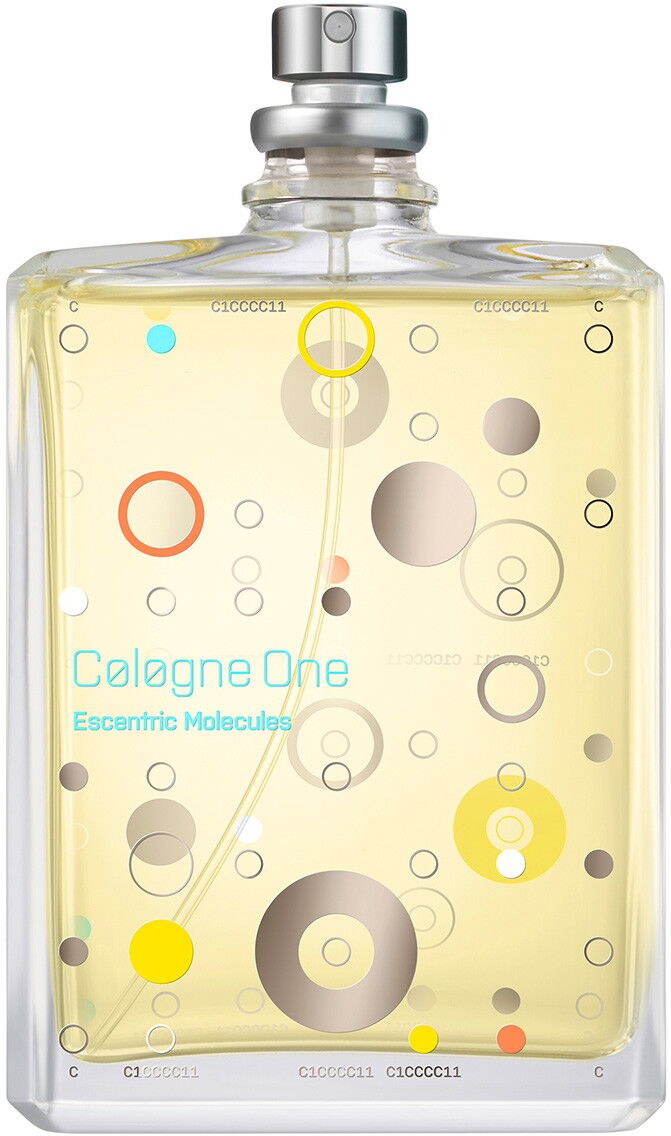

Similar search terms for Escentric-Molecules-Cologne-One
Top-Angebote
Products related to Escentric-Molecules-Cologne-One:
-
Escentric Molecules Escentric 01 Shower Gel unisex 200 mlEscentric Molecules Escentric 01, 200 ml, Shower products unisex, Turn your daily shower or bath into a special experience you’ll be looking forward to all day. Escentric Molecules Escentric 01 body wash will delight your senses and make your skin smell wonderful. Characteristics: washes the skin and gets rid of dirt makes skin feel comfortable enhances the intensity of the fragrance from the same line pair with the fragrance for a wonderful gift52,50 €*Shipping: 5,45 €Secure redirect to the provider
-
Escentric Molecules Escentric 04 Eau de Toilette unisex + Case 30 mlEscentric Molecules Escentric 04, 30 ml, Eaux de Toilette unisex, New day – new opportunity to tackle more challenges. Escentric Molecules Escentric 04 unisex Eau de Toilette will refresh your mind so that you can boldly follow your instinct. Embrace your everyday adventures! woody fragrance aromatic fragrance with herbal notes suitable for everyday wear unisex – suitable for both women and men76,50 €*Shipping: 5,45 €Secure redirect to the provider
-
Escentric Molecules Escentric 05 Eau de Toilette unisex Refill 30 mlEscentric Molecules Escentric 05, 30 ml, Eaux de Toilette unisex, Discover a fragrance that doesn’t neatly fit into a box and instead brings out your individuality. Escentric Molecules Escentric 05 unisex Eau de Toilette is the right choice when you want to show off your uniqueness. unique fragrance for a unique personality unisex fragrance72,25 €*Shipping: 5,45 €Secure redirect to the provider




-
Which of the following molecules are dipole molecules and why?
Molecules that have a dipole moment are considered dipole molecules. A dipole moment occurs when there is an uneven distribution of electron density within a molecule, resulting in a partial positive and partial negative charge. For example, molecules like water (H2O) and ammonia (NH3) are dipole molecules because of their polar covalent bonds, which create a separation of charge within the molecule. On the other hand, molecules like carbon dioxide (CO2) and methane (CH4) are nonpolar and do not have a dipole moment because the electronegativity of the atoms cancel each other out, resulting in a symmetrical distribution of charge. **
-
What is the difference between compound molecules and element molecules?
Compound molecules are made up of two or more different elements chemically bonded together, such as water (H2O) or carbon dioxide (CO2). Element molecules, on the other hand, are made up of two or more atoms of the same element bonded together, such as oxygen (O2) or nitrogen (N2). In compound molecules, the atoms are different, while in element molecules, the atoms are the same. **
-
Why are water molecules permanent dipoles and carbon dioxide molecules not?
Water molecules are permanent dipoles because they have a bent molecular shape with unequal sharing of electrons between the oxygen and hydrogen atoms. This results in a partial negative charge on the oxygen atom and partial positive charges on the hydrogen atoms, creating a permanent dipole moment. On the other hand, carbon dioxide molecules are not permanent dipoles because they have a linear molecular shape with symmetrical distribution of the two oxygen atoms and the carbon atom. This results in equal sharing of electrons and no permanent dipole moment. **
-
Why do heptan-1-ol molecules and water molecules not mix?
Heptan-1-ol molecules and water molecules do not mix well because heptan-1-ol is a nonpolar molecule, while water is a polar molecule. Nonpolar molecules are not attracted to polar molecules, so they do not easily mix. Additionally, heptan-1-ol is hydrophobic, meaning it repels water, further preventing the two substances from mixing. This is due to the difference in the polarity and intermolecular forces between the two substances. **

How can one determine the polarity in large molecules?
One way to determine the polarity in large molecules is by looking at the distribution of charges within the molecule. If there is an uneven distribution of electrons, with one part of the molecule being more electronegative than another, then the molecule is likely polar. Additionally, one can use computational methods such as molecular modeling or quantum chemical calculations to predict the polarity of a large molecule based on its structure and the electronegativities of the atoms involved. Experimentally, techniques such as infrared spectroscopy or X-ray crystallography can also provide information on the polarity of a molecule by analyzing the interactions between different atoms and functional groups. **
How can one determine the polarity of large molecules?
One way to determine the polarity of large molecules is by looking at the distribution of charge within the molecule. If there are regions of the molecule with significantly different electronegativities, it is likely to be polar. Another method is to consider the symmetry of the molecule - if the molecule is symmetric and has no regions of unequal charge distribution, it is likely nonpolar. Additionally, experimental techniques such as infrared spectroscopy or X-ray crystallography can also be used to determine the polarity of large molecules. **
Top-Angebote
Products related to Escentric-Molecules-Cologne-One:
-
Escentric Molecules Escentric 01 Shower Gel unisex 200 mlEscentric Molecules Escentric 01, 200 ml, Shower products unisex, Turn your daily shower or bath into a special experience you’ll be looking forward to all day. Escentric Molecules Escentric 01 body wash will delight your senses and make your skin smell wonderful. Characteristics: washes the skin and gets rid of dirt makes skin feel comfortable enhances the intensity of the fragrance from the same line pair with the fragrance for a wonderful gift52,50 €*Shipping: 5,45 €Secure redirect to the provider
-
'Salts or molecules?'
Salts are compounds formed from the reaction of an acid and a base, while molecules are made up of atoms bonded together. Salts are ionic compounds, meaning they are made up of ions, while molecules can be either ionic or covalent compounds. Salts have a specific crystalline structure and are often soluble in water, while molecules can have a wide range of physical properties and solubilities. Overall, salts and molecules are distinct types of chemical compounds with different structures and properties. **
-
How can one determine the polarity of molecules?
The polarity of a molecule can be determined by considering the electronegativity of its constituent atoms and the overall molecular geometry. If the molecule has polar covalent bonds, meaning there is a significant difference in electronegativity between the atoms involved in the bond, then the molecule is likely to be polar. Additionally, the overall molecular shape and symmetry can also influence polarity. For example, if the molecule has a symmetrical shape and the polar bonds are arranged in a way that cancels out their dipole moments, then the molecule may be nonpolar. Overall, understanding the electronegativity and molecular geometry of a molecule can help determine its polarity. **
-
Which of the following molecules are dipole molecules and why?
Molecules that have a dipole moment are considered dipole molecules. A dipole moment occurs when there is an uneven distribution of electron density within a molecule, resulting in a partial positive and partial negative charge. For example, molecules like water (H2O) and ammonia (NH3) are dipole molecules because of their polar covalent bonds, which create a separation of charge within the molecule. On the other hand, molecules like carbon dioxide (CO2) and methane (CH4) are nonpolar and do not have a dipole moment because the electronegativity of the atoms cancel each other out, resulting in a symmetrical distribution of charge. **
-
What is the difference between compound molecules and element molecules?
Compound molecules are made up of two or more different elements chemically bonded together, such as water (H2O) or carbon dioxide (CO2). Element molecules, on the other hand, are made up of two or more atoms of the same element bonded together, such as oxygen (O2) or nitrogen (N2). In compound molecules, the atoms are different, while in element molecules, the atoms are the same. **
Similar search terms for Escentric-Molecules-Cologne-One
-
Escentric Molecules Escentric 04 Eau de Toilette unisex + Case 30 mlEscentric Molecules Escentric 04, 30 ml, Eaux de Toilette unisex, New day – new opportunity to tackle more challenges. Escentric Molecules Escentric 04 unisex Eau de Toilette will refresh your mind so that you can boldly follow your instinct. Embrace your everyday adventures! woody fragrance aromatic fragrance with herbal notes suitable for everyday wear unisex – suitable for both women and men76,50 €*Shipping: 5,45 €Secure redirect to the provider
-
Escentric Molecules Escentric 05 Eau de Toilette unisex Refill 30 mlEscentric Molecules Escentric 05, 30 ml, Eaux de Toilette unisex, Discover a fragrance that doesn’t neatly fit into a box and instead brings out your individuality. Escentric Molecules Escentric 05 unisex Eau de Toilette is the right choice when you want to show off your uniqueness. unique fragrance for a unique personality unisex fragrance72,25 €*Shipping: 5,45 €Secure redirect to the provider
-
Escentric Molecules Escentric Discovery Set (Eau de Toilette, 5 x 8.5 ml)The fragrances focus on an extraordinary array of aroma molecules and are presented in binary pairs. Each pair explores an aroma molecule in two different ways. The Escentric fragrances highlight the unique character of the aroma molecule with ingredients that emphasize its essential facets. This set contains: Escentric 01: Iso-E-Super, 8.5 mlEscentric 02: Ambroxan, 8.5 mlEscentric 03: Vetiveryl acetate, 8.5 mlEscentric 04: Javanol, 8.5 mlEscentric 05: Cashmeran, 8.5 ml93,03 €*Shipping: 5,90 €Secure redirect to the provider
-
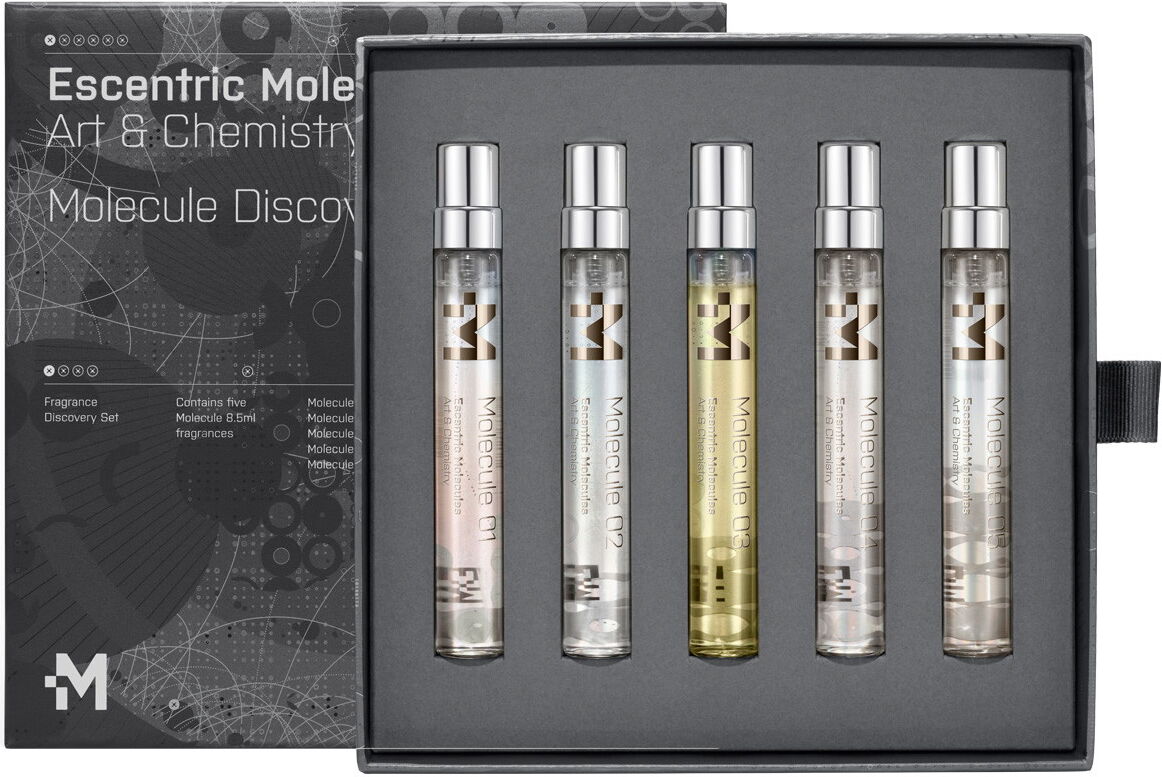
Escentric Molecules Molecule Discovery Set (Eau de Toilette, 5 x 8.5 ml)The Molecule fragrances are radically minimalist and reduced to their essential elements. A single aromatic note delivers the most dynamic results. They contain no odorants other than the aroma molecule. Pure and unique. This set contains: Molecule 01: Revolutionary Minimalism, 8.5 mlMolecule 02: Mineral Amber, 8.5 mlMolecule 03: Grassy roots, 8.5 mlMolecule 04: Enveloping shine, 8.5 mlMolecule 05: Strong cashmere, 8.5 ml82,69 €*Shipping: 5,90 €Secure redirect to the provider
-
Why are water molecules permanent dipoles and carbon dioxide molecules not?
Water molecules are permanent dipoles because they have a bent molecular shape with unequal sharing of electrons between the oxygen and hydrogen atoms. This results in a partial negative charge on the oxygen atom and partial positive charges on the hydrogen atoms, creating a permanent dipole moment. On the other hand, carbon dioxide molecules are not permanent dipoles because they have a linear molecular shape with symmetrical distribution of the two oxygen atoms and the carbon atom. This results in equal sharing of electrons and no permanent dipole moment. **
-
Why do heptan-1-ol molecules and water molecules not mix?
Heptan-1-ol molecules and water molecules do not mix well because heptan-1-ol is a nonpolar molecule, while water is a polar molecule. Nonpolar molecules are not attracted to polar molecules, so they do not easily mix. Additionally, heptan-1-ol is hydrophobic, meaning it repels water, further preventing the two substances from mixing. This is due to the difference in the polarity and intermolecular forces between the two substances. **
-
How can one determine the polarity in large molecules?
One way to determine the polarity in large molecules is by looking at the distribution of charges within the molecule. If there is an uneven distribution of electrons, with one part of the molecule being more electronegative than another, then the molecule is likely polar. Additionally, one can use computational methods such as molecular modeling or quantum chemical calculations to predict the polarity of a large molecule based on its structure and the electronegativities of the atoms involved. Experimentally, techniques such as infrared spectroscopy or X-ray crystallography can also provide information on the polarity of a molecule by analyzing the interactions between different atoms and functional groups. **
-
How can one determine the polarity of large molecules?
One way to determine the polarity of large molecules is by looking at the distribution of charge within the molecule. If there are regions of the molecule with significantly different electronegativities, it is likely to be polar. Another method is to consider the symmetry of the molecule - if the molecule is symmetric and has no regions of unequal charge distribution, it is likely nonpolar. Additionally, experimental techniques such as infrared spectroscopy or X-ray crystallography can also be used to determine the polarity of large molecules. **
* All prices are inclusive of VAT and, if applicable, plus shipping costs. The offer information is based on the details provided by the respective shop and is updated through automated processes. Real-time updates do not occur, so deviations can occur in individual cases. ** Note: Parts of this content were created by AI.