Buy evgym.com ?
We are moving the project
evgym.com .
Are you interested in purchasing the domain
evgym.com ?
domain@kv-gmbh.de · 0541-91531010
Buy evgym.com ?
Are organic acids, aliphatic acids, and carboxylic acids the same?
No, organic acids, aliphatic acids, and carboxylic acids are not the same. Organic acids are a broad category of acids that are derived from living organisms and can include carboxylic acids, as well as other types of acids such as phenols and sulfonic acids. Aliphatic acids are a specific subset of organic acids that are characterized by having straight or branched carbon chains. Carboxylic acids are a type of organic acid that contain a carboxyl group (COOH) and are a subset of aliphatic acids. Therefore, while all carboxylic acids are organic acids and aliphatic acids, not all organic acids or aliphatic acids are carboxylic acids. **
How do inorganic acids differ from carboxylic acids?
Inorganic acids are typically derived from inorganic compounds and do not contain a carboxyl group (–COOH) like carboxylic acids. Inorganic acids are usually simpler in structure and are often strong acids, meaning they completely dissociate in water to release hydrogen ions. Carboxylic acids, on the other hand, contain a carboxyl group and are organic compounds that are typically weaker acids compared to inorganic acids. Additionally, carboxylic acids are commonly found in nature and are important in biological processes. **
Similar search terms for Acids
Top-Angebote
Products related to Acids:
-
Do strong acids conduct electricity better than weak acids?
Yes, strong acids conduct electricity better than weak acids. This is because strong acids completely dissociate into ions in solution, resulting in a higher concentration of ions available to carry an electric current. On the other hand, weak acids only partially dissociate, leading to a lower concentration of ions and therefore lower conductivity. **
-
Why are simple organic acids also called alkanes acids?
Simple organic acids are also called alkanes acids because they are derived from alkanes, which are saturated hydrocarbons. These acids have a carboxyl group (-COOH) attached to an alkyl group, making them a type of alkane derivative. The simplest organic acid, formic acid, is derived from methane, the simplest alkane. The naming convention reflects the structural relationship between alkanes and organic acids. **
-
Why are simple organic acids also called alkanic acids?
Simple organic acids are also called alkanic acids because they are derived from alkanes, which are saturated hydrocarbons. These acids contain a carboxyl group (-COOH) attached to an alkyl group, which is a hydrocarbon chain. The alkyl group in these acids is derived from alkanes, hence the name alkanic acids. Examples of alkanic acids include acetic acid (derived from methane) and formic acid (derived from methanol). **
-
Why are amino acids divided into polar and nonpolar amino acids?
Amino acids are divided into polar and nonpolar categories based on the chemical properties of their side chains. This division is important because it helps to understand how amino acids interact with each other and with their environment. Polar amino acids have side chains that contain functional groups such as hydroxyl, amine, or carboxyl groups, which can form hydrogen bonds and interact with water. Nonpolar amino acids have side chains that are hydrophobic and do not readily interact with water. This classification is crucial for understanding protein structure, function, and interactions. **
What are the similarities between amino acids, fatty acids, and carbohydrates?
Amino acids, fatty acids, and carbohydrates are all essential components of the human diet and are necessary for the body to function properly. They are all organic compounds that contain carbon, hydrogen, and oxygen. Additionally, they all play a crucial role in providing energy for the body. Furthermore, they are all used as building blocks for various molecules in the body, such as proteins, lipids, and glycogen. **
Can you help me with an exercise on the properties of acids?
Of course! I'd be happy to help you with an exercise on the properties of acids. Please provide me with the specific details or questions related to the exercise, and I'll do my best to assist you in understanding the properties of acids. **
Top-Angebote
Products related to Acids:
-
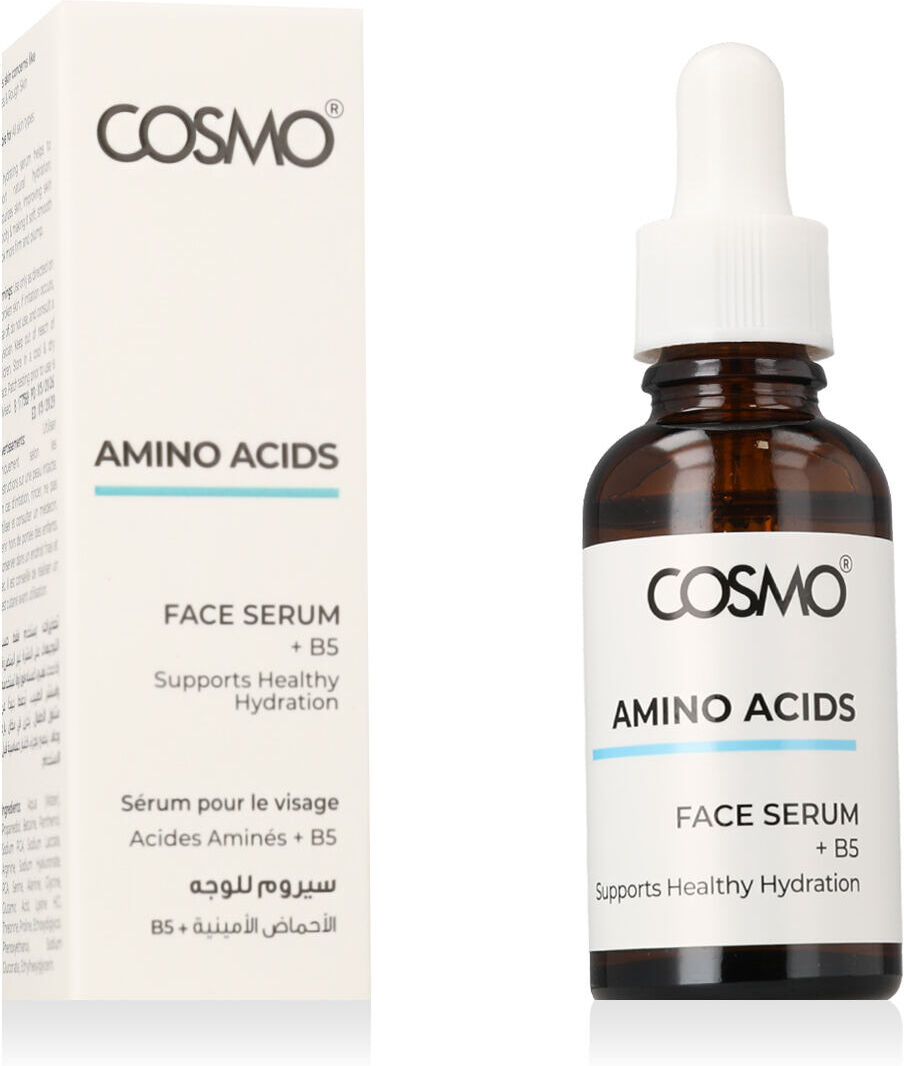
COSMO ADVANCED Amino Acids + B5 Face Serum 30 mlCOSMO ADVANCED Amino Acids + B5 Face Serum 30 ml is a hydrating facial serum with amino acids and vitamin B5, designed for the daily care of skin prone to dehydration, dryness and uncomfortable tightness. The combination of amino acids and vitamin B5 helps support skin hydration and comfort while promoting a soft, supple and smoother appearance. FeaturesHydrating facial serum formulated with amino acids.Contains vitamin B5 as part of its caring formula.Suitable for skin prone to dehydration and feelings of dryness.Promotes a soft, supple and smoother-looking complexion.Supplied in a 30 ml pack.Key benefitsHelps improve and maintain skin hydration.Helps relieve feelings of dryness and tightness.Supports the skin’s own protective barrier.Helps keep the skin soft and supple.Promotes a fresh, smooth and comfortable-looking complexion.How to useApply a few drops of serum to freshly cleansed skin on the face and neck.Gently smooth or press into the skin until absorbed.Use in the morning and/or evening according to your skin’s needs.Follow with a suitable moisturising or caring cream.For morning skincare, complete your routine with suitable sun protection.11,00 €*Shipping: 7,90 €Secure redirect to the provider
-
Are organic acids, aliphatic acids, and carboxylic acids the same?
No, organic acids, aliphatic acids, and carboxylic acids are not the same. Organic acids are a broad category of acids that are derived from living organisms and can include carboxylic acids, as well as other types of acids such as phenols and sulfonic acids. Aliphatic acids are a specific subset of organic acids that are characterized by having straight or branched carbon chains. Carboxylic acids are a type of organic acid that contain a carboxyl group (COOH) and are a subset of aliphatic acids. Therefore, while all carboxylic acids are organic acids and aliphatic acids, not all organic acids or aliphatic acids are carboxylic acids. **
-
How do inorganic acids differ from carboxylic acids?
Inorganic acids are typically derived from inorganic compounds and do not contain a carboxyl group (–COOH) like carboxylic acids. Inorganic acids are usually simpler in structure and are often strong acids, meaning they completely dissociate in water to release hydrogen ions. Carboxylic acids, on the other hand, contain a carboxyl group and are organic compounds that are typically weaker acids compared to inorganic acids. Additionally, carboxylic acids are commonly found in nature and are important in biological processes. **
-
Do strong acids conduct electricity better than weak acids?
Yes, strong acids conduct electricity better than weak acids. This is because strong acids completely dissociate into ions in solution, resulting in a higher concentration of ions available to carry an electric current. On the other hand, weak acids only partially dissociate, leading to a lower concentration of ions and therefore lower conductivity. **
-
Why are simple organic acids also called alkanes acids?
Simple organic acids are also called alkanes acids because they are derived from alkanes, which are saturated hydrocarbons. These acids have a carboxyl group (-COOH) attached to an alkyl group, making them a type of alkane derivative. The simplest organic acid, formic acid, is derived from methane, the simplest alkane. The naming convention reflects the structural relationship between alkanes and organic acids. **
Similar search terms for Acids
-
Why are simple organic acids also called alkanic acids?
Simple organic acids are also called alkanic acids because they are derived from alkanes, which are saturated hydrocarbons. These acids contain a carboxyl group (-COOH) attached to an alkyl group, which is a hydrocarbon chain. The alkyl group in these acids is derived from alkanes, hence the name alkanic acids. Examples of alkanic acids include acetic acid (derived from methane) and formic acid (derived from methanol). **
-
Why are amino acids divided into polar and nonpolar amino acids?
Amino acids are divided into polar and nonpolar categories based on the chemical properties of their side chains. This division is important because it helps to understand how amino acids interact with each other and with their environment. Polar amino acids have side chains that contain functional groups such as hydroxyl, amine, or carboxyl groups, which can form hydrogen bonds and interact with water. Nonpolar amino acids have side chains that are hydrophobic and do not readily interact with water. This classification is crucial for understanding protein structure, function, and interactions. **
-
What are the similarities between amino acids, fatty acids, and carbohydrates?
Amino acids, fatty acids, and carbohydrates are all essential components of the human diet and are necessary for the body to function properly. They are all organic compounds that contain carbon, hydrogen, and oxygen. Additionally, they all play a crucial role in providing energy for the body. Furthermore, they are all used as building blocks for various molecules in the body, such as proteins, lipids, and glycogen. **
-
Can you help me with an exercise on the properties of acids?
Of course! I'd be happy to help you with an exercise on the properties of acids. Please provide me with the specific details or questions related to the exercise, and I'll do my best to assist you in understanding the properties of acids. **
* All prices are inclusive of VAT and, if applicable, plus shipping costs. The offer information is based on the details provided by the respective shop and is updated through automated processes. Real-time updates do not occur, so deviations can occur in individual cases. ** Note: Parts of this content were created by AI.